Custom force sensors
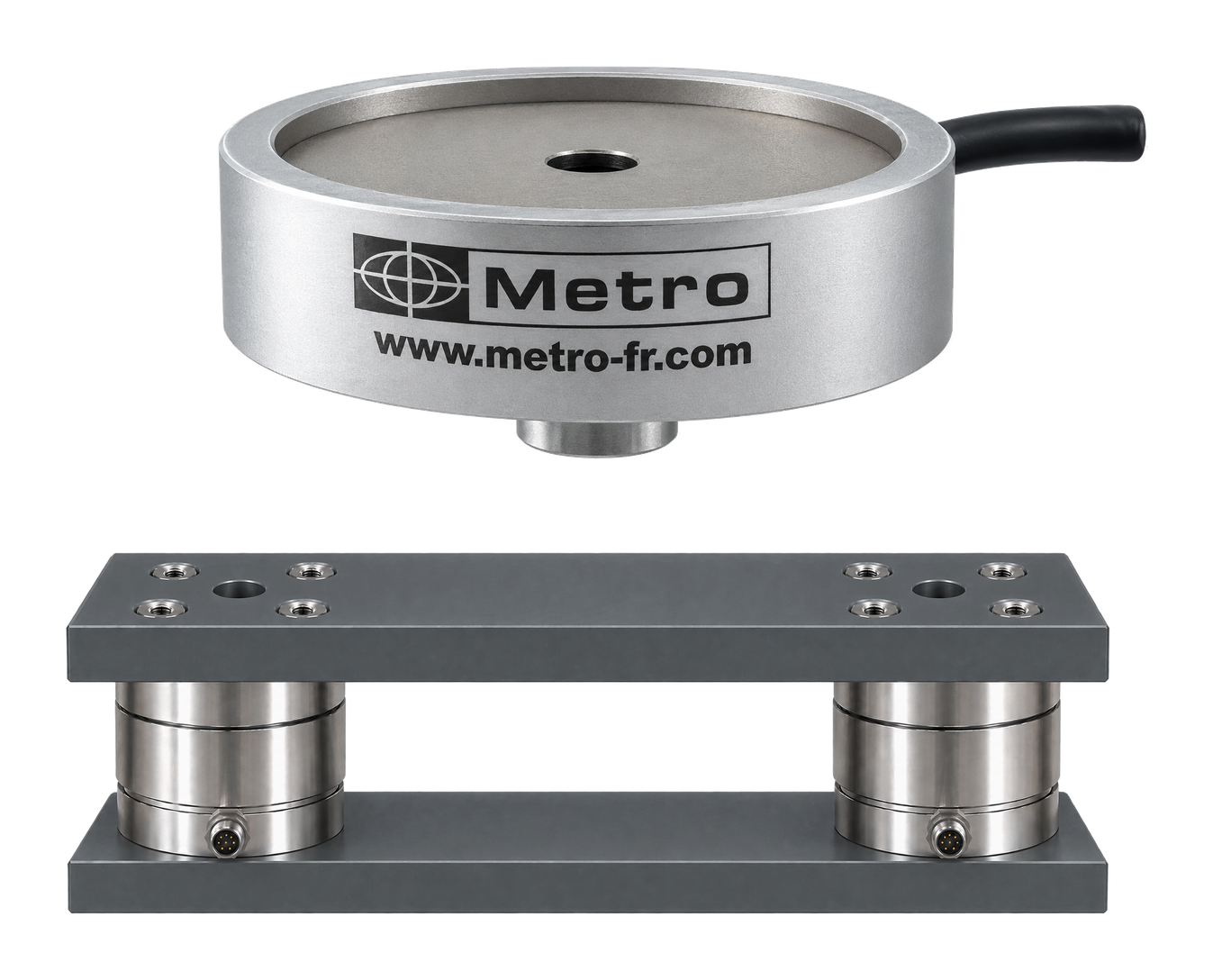
Custom force sensors
Limited installation space, unusual loads, mounting dictated by the machine, high inspection rates: some applications simply cannot be served by an off-the-shelf sensor.
When a standard sensor won't do the job, METRO designs a custom force sensor, with its geometry, capacity, mounting and connections tailored to your machine and your load.
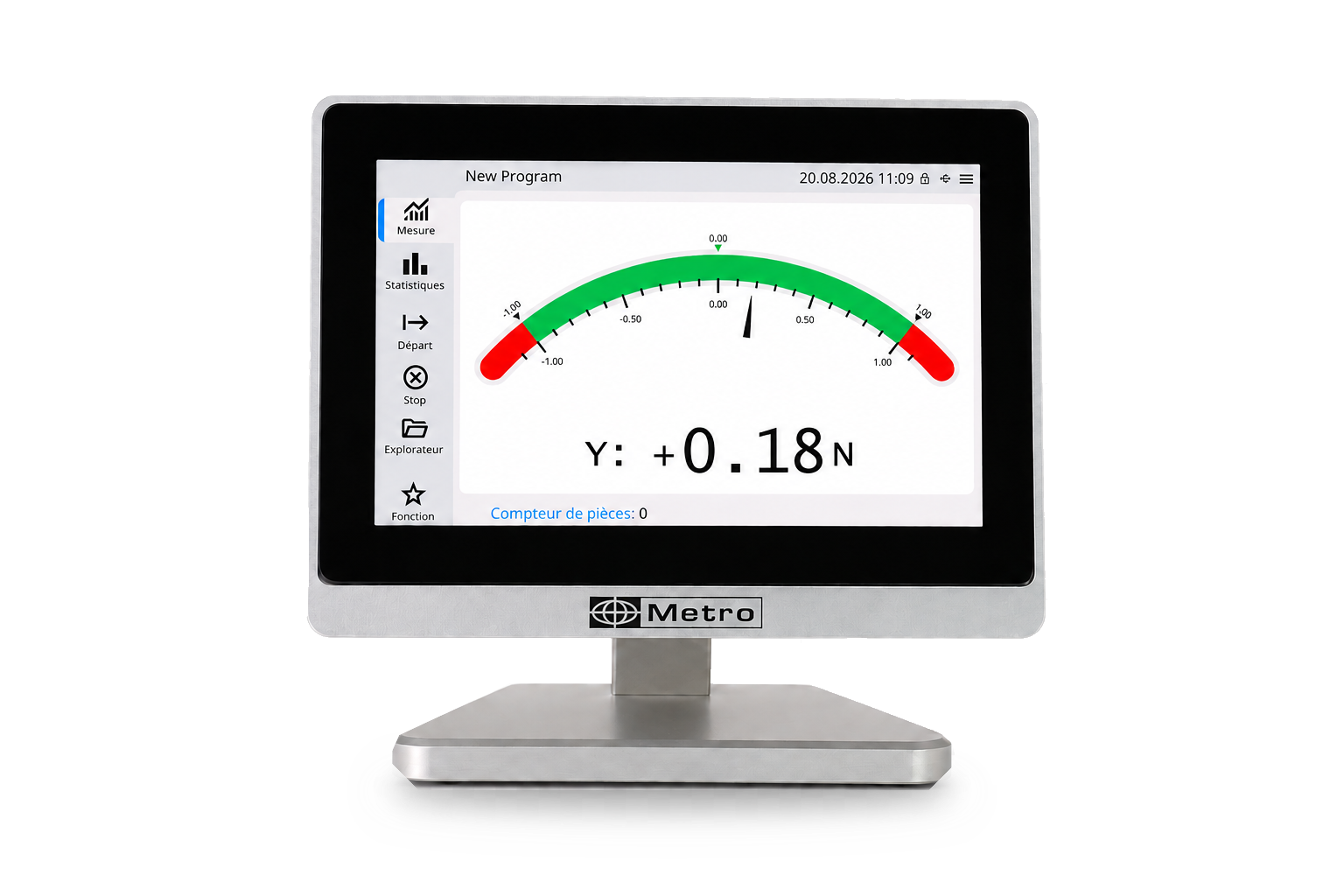
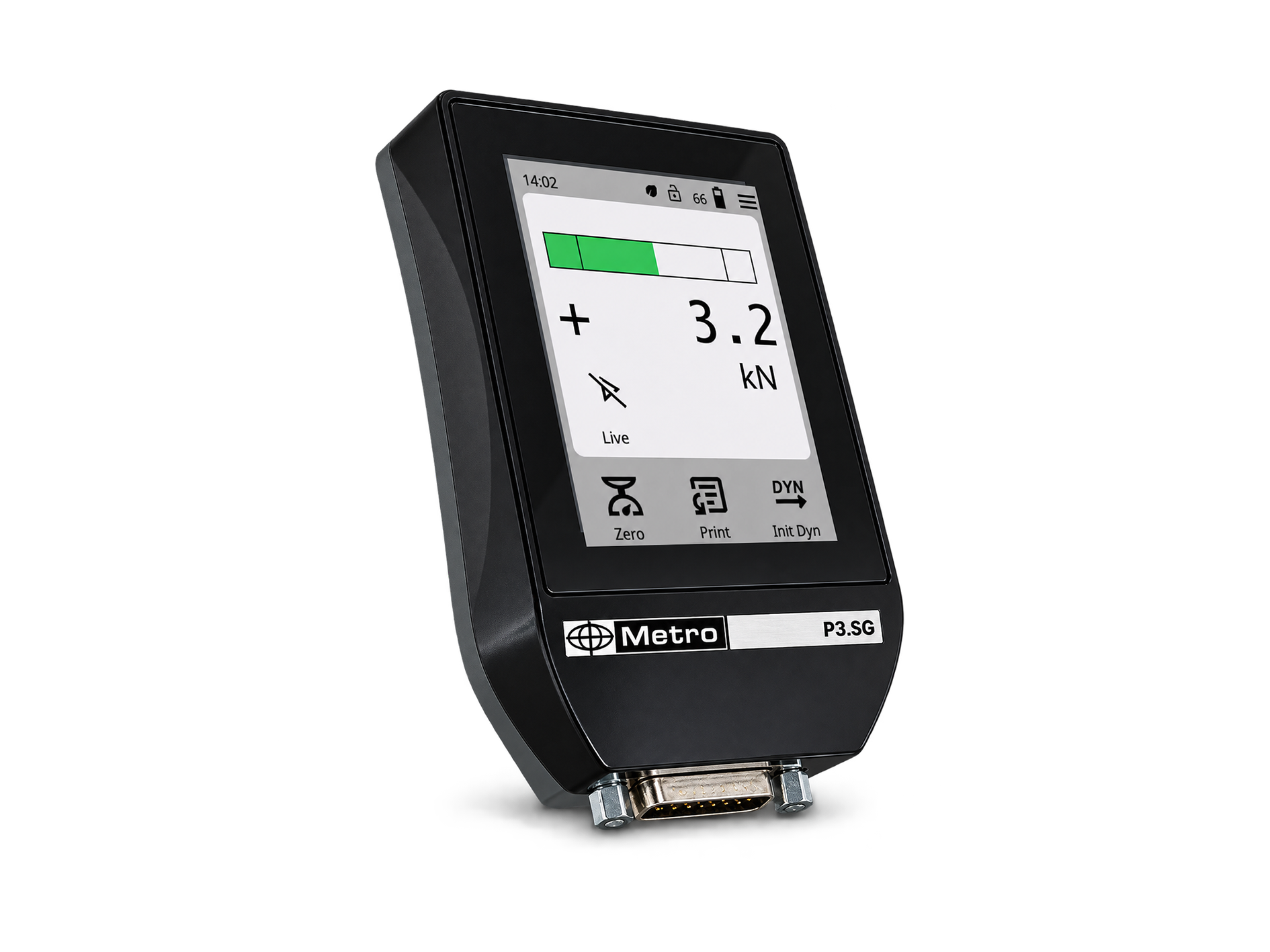
If your application calls for it, we go further and build the complete system: the loading mechanism, the force sensor, the associated position measurement and the test sequence programmed into the display unit, with results sent directly to your quality software or your PLC. You receive a ready-to-use measuring system, not a set of components you have to make work together.
Design, machining, strain gauge bonding, assembly and calibration are all carried out in-house, in France.
Every project starts in the mechanical design office.
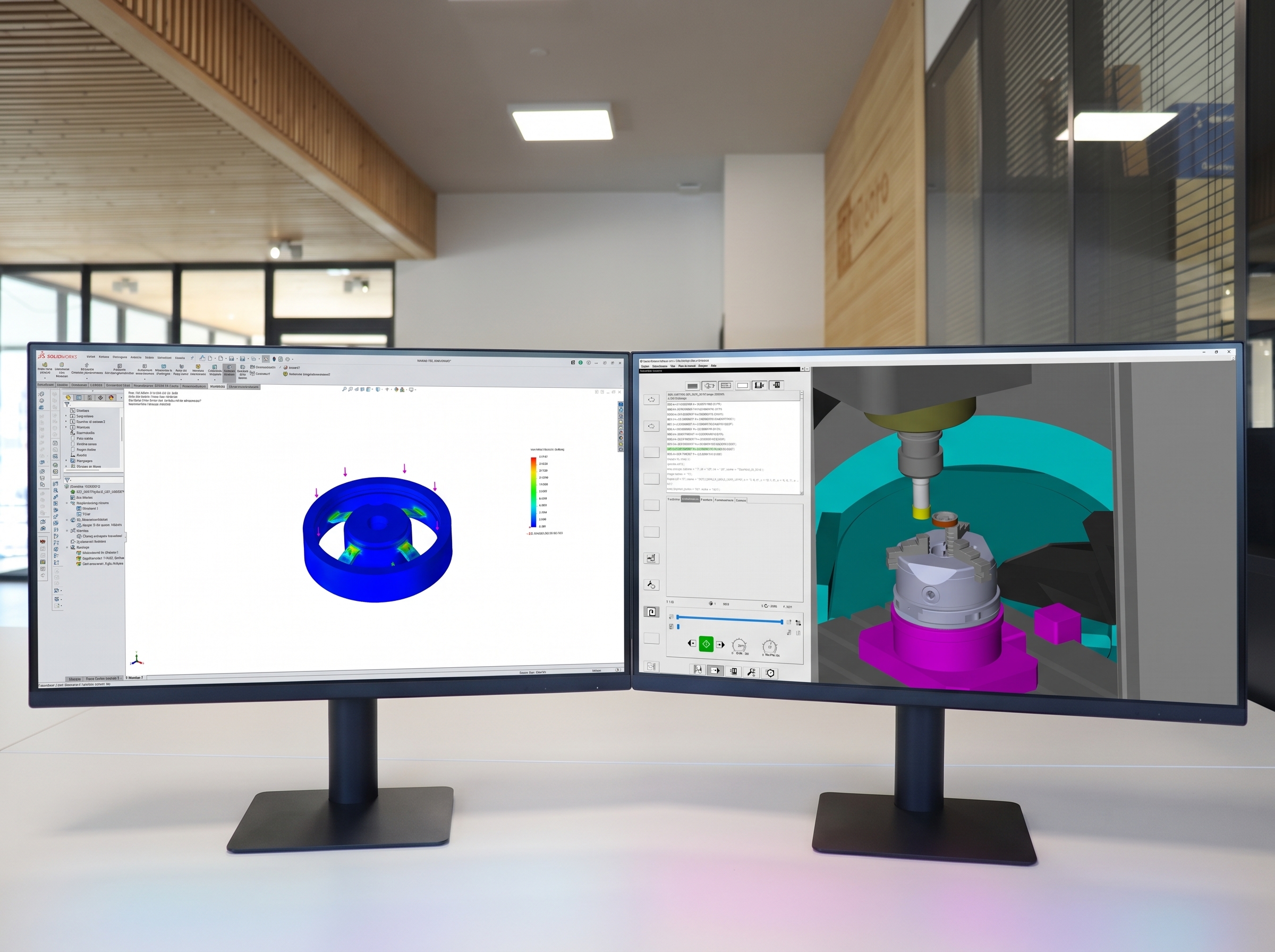
The spring element geometry is modelled and dimensioned according to the force to be measured, the available installation envelope and the interfaces dictated by your machine.
Working in house allows us to develop a design quickly and to confirm feasibility before any commitment to manufacturing.
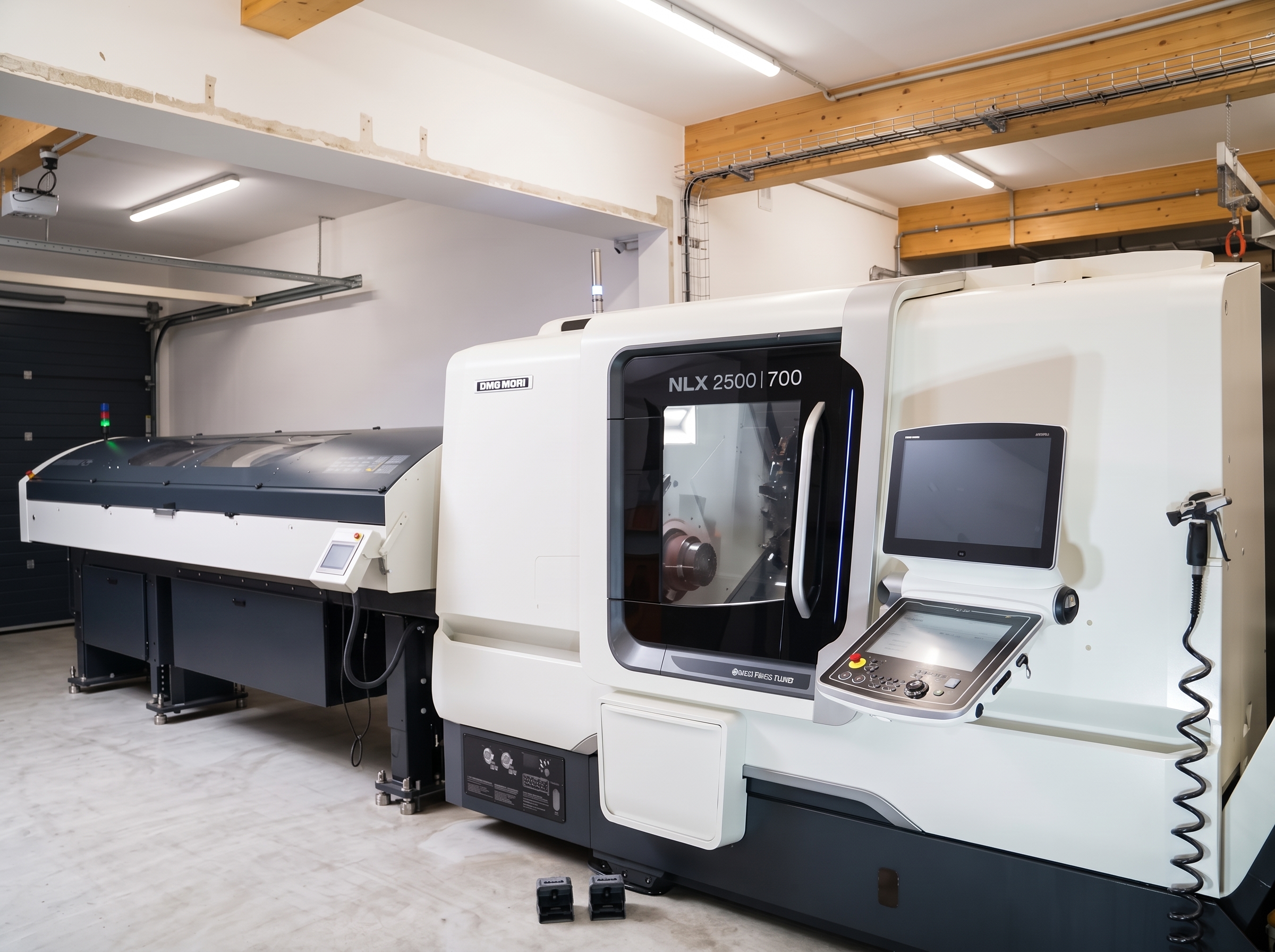
Spring elements and mechanical parts are machined on site, on our own machine tools.
Turning, milling, assembly and wiring are all located next to the design office.
This shortens prototyping lead times, allows a modification to be implemented without going through an external supplier, and ensures that a transducer delivered several years ago remains reproducible.
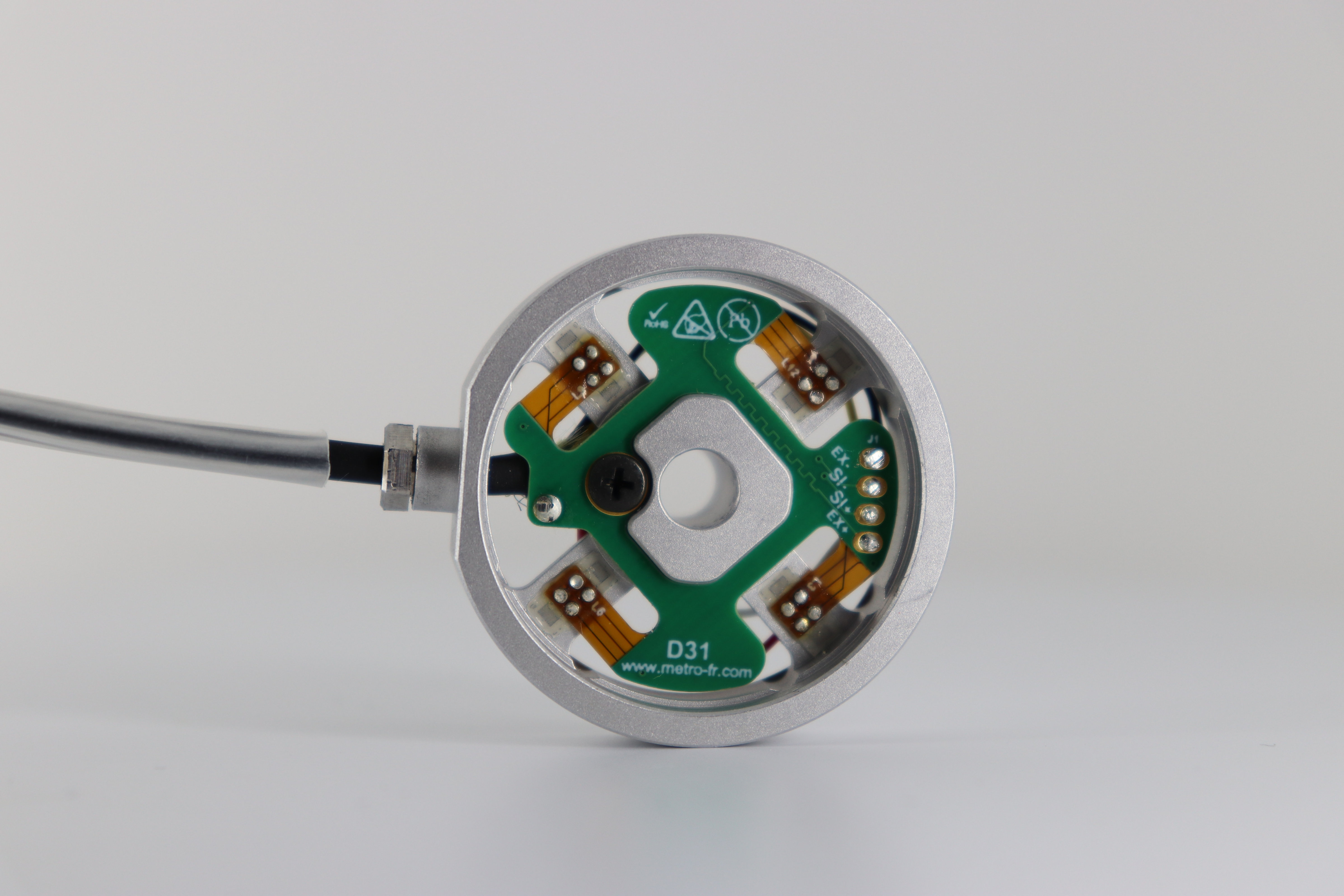
Strain gauges are bonded onto our load cell bodies, directly in our workshops.
Surface preparation, positioning, bonding and bridge wiring are all carried out by our own teams.
This step determines the accuracy, stability and service life of the sensor. Keeping it in-house means we control signal quality from the load cell body to the final reading.
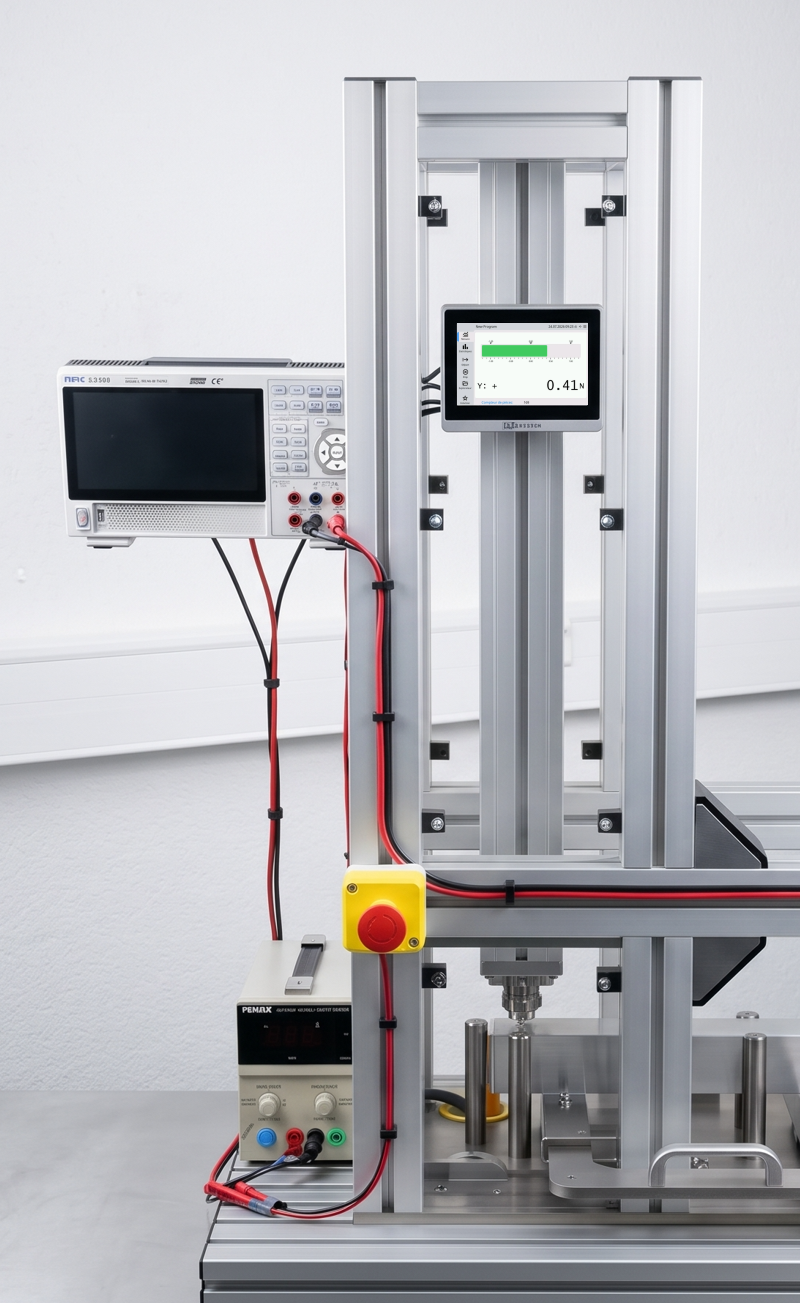
Every sensor is calibrated in-house on our own test benches, covering a wide range of capacities, from low forces to high loads, in both tension and compression. When a custom sensor exceeds what a standard calibration press can handle, whether because of its geometry, mounting or load, we design and build the dedicated calibration equipment ourselves, as shown in the example opposite.
Calibration is performed on the sensor together with its electronics, so the value read by your operator or PLC is the value we verified.